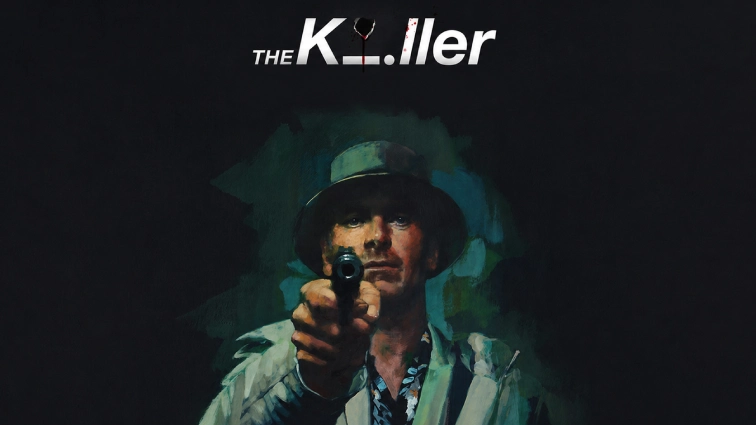
For years, audiences and critics have shared a quiet worry: that Hollywood has traded genuine storytelling for franchise safety nets, loud spectacle, and predictable sequels. Every summer brings another superhero installment. Every awards season delivers another crowd pleaser dressed up in prestige clothing. Against that backdrop, a film like The Killer arrives not just as a movie but as a statement.
The killer release date was October 27, 2023, in select theaters, before arriving on Netflix on November 10 of the same year. David Fincher’s 2023 thriller, quietly slipped onto the platform after that brief theatrical window, is the kind of film that reminds you what serious, confident filmmaking actually looks like. It does not ask for your approval. It simply does its job, and does it brilliantly.
What the Film Is Actually About
If you want a quick the killer 2023 film plot summary, here it is: a nameless professional assassin played by Michael Fassbender carries out contract kills across the world until one missed shot unravels everything he has built his life around.
The story begins in Paris, where he is on a multi-day stakeout across from an apartment, working out of a rented room. McDonald’s becomes his fuel for protein, The Smiths play on repeat, and his inner world is delivered through a calm, dry voiceover. His existence runs on rules and a carefully built code designed to keep emotion far from his work. One of them “Forbid Empathy” lands like a mantra, except it is not empty repetition; he actually lives by it.
Then he misses.
That single mistake sets off everything that follows. His partner is attacked back in the Dominican Republic, left barely alive by people sent to clean up the situation. The man who has built his entire identity around never improvising and never letting things get personal does exactly the opposite. He starts hunting.
What follows is not a typical action movie. There are no car chases built for trailers. There are no one-liners written to sell merchandise. Instead, The Killer is a slow, deliberate, and quietly funny film about a man at war with his own stated beliefs. Every rule he recites, he eventually breaks. Every line of voiceover that sounds like philosophy eventually gets contradicted by what he actually does. Fincher and writer Andrew Kevin Walker, who also wrote Se7en, build the whole film on that gap between what the character says and what he is.
Why Fincher Is the Right Director for This Story
David Fincher has never been a director who plays it safe. From Se7en to Zodiac, The Social Network, and Gone Girl, he has consistently made films that prioritize atmosphere, precision, and psychological depth over easy entertainment. He is one of the few mainstream filmmakers who brings something that feels like genuine artistic vision to every project he touches.
The Killer fits perfectly into that body of work. Based on a French graphic novel series by Alexis “Matz” Nolent, the material gives Fincher a protagonist who mirrors his own reputation: obsessive, exacting, deeply committed to process. The film quietly becomes a meditation on perfectionism itself, and on what happens when the perfectly constructed system cracks.
For the killer 2023 David Fincher Netflix collaboration, Netflix gave Fincher full creative control, which is precisely why the film feels so uncompromised. Cinematographer Erik Messerschmidt frames every scene with a cool, clinical beauty. Editor Kirk Baxter keeps the pacing tight without ever feeling rushed. Trent Reznor and Atticus Ross, regular Fincher collaborators, deliver a score that is tense and strange and exactly right. The result is a film where every department is pulling in the same direction, which is rarer than it sounds.
The Deliberate Slowness Is the Point
One criticism sometimes aimed at The Killer is that it moves too slowly, particularly in the opening act. That criticism misses what Fincher is doing entirely.
The long Paris stakeout is not filler; it is character building through behavior rather than exposition. Who this man is becomes clear without explanation, you see it in how he manages boredom, controls his environment, and talks himself through inaction. By the time the shot is fired and missed, the consequences of that failure feel fully inevitable for someone built like him.
That kind of patience in filmmaking is genuinely rare. Most studios would demand that the film get to the action faster. Fincher refuses, and the film is better for it.
What Michael Fassbender Brings to the Role
Michael Fassbender had been largely absent from major film releases for several years before The Killer. His return is significant not because it is flashy but because it is the opposite of flashy.
He plays the assassin without showmanship. He builds the character from the inside, letting the voiceover carry the emotional weight while his physical performance stays almost completely contained. There is a grounded, everyman quality to what he does that makes the lifestyle feel disturbingly normal. He turns assassination into something as mundane as ordering from Amazon or picking up a free gym membership. You get the feeling that if you saw this man on the street, you would not notice him at all.
What makes the performance work is the gap between what the character says and what he actually does. He forbids empathy, improvises constantly, and insists nothing gets personal, yet everything inevitably does. Fassbender plays this contradiction without underlining it or winking at the audience, allowing it to unfold naturally. The result is a performance that builds quietly and lands with a devastating cumulative effect.
The cast of the killer 2023 also includes Tilda Swinton in a scene-stealing third act appearance that clearly draws on the Adversaries Restaurant dynamic that Michael Mann practically invented with Heat. Swinton and Fassbender are both visibly having a good time, which makes the scene crackle in a way the rest of the film, by design, does not. Charles Parnell and Arliss Howard round out the support, but this is almost entirely a one-man show.
The Voiceover as the Film’s True Dialogue
Most of what you hear from the assassin is internal. His voiceover covers his philosophy, his rules, his observations about the world. He talks about how people like him blend in precisely because the modern world is built for distraction. Familiar brands like Amazon, Starbucks, WeWork, and Wordle give a man with no identity the perfect cover. He fits in because he has nothing authentic to give away.
The writing in these passages is sharp and often darkly funny. There is a running bit about the fake names the assassin uses, each one more absurd than the last, that gets a genuine laugh every time. There is cynicism in the narration that feels earned rather than posed. And underneath the philosophy and the mantras, there is something that reads like loneliness, even if the character would never admit it.
The Scene That Defines the Film
No sequence in The Killer hits harder than the fight between the assassin and a hired enforcer referred to simply as the Brute, set inside a Florida marsh house. When you have tracked down the man who left your partner in the ICU, you had better be ready for war, and war is exactly what this is.
The fight runs about three merciless minutes. Fincher shoots it alternately wide and close, panning and pulling back, and the sound design by Ren Klyce works in lockstep with the Reznor-Ross score to make every punch and choke feel physical and real. There is nothing stylized about it. No slow motion, no carefully choreographed martial arts. It is brutal, exhausting, and messy in a way that feels honest about what violence actually costs.
That fight is also where the film is most honest about its protagonist. He wins, barely, and what follows tells you everything about who he is.
The Deeper Argument the Film Is Making
The Killer is not simply a thriller about a hitman who goes rogue. It is a film with something to say about a specific kind of modern existence, one that is detached, transactional, and surprisingly easy to sustain in a world that rewards both.
The assassin’s philosophy is built on the idea that staying precise and unemotional keeps him above ordinary moral life. He counts the number of people born and dying each day and tells himself that anything he does is statistically insignificant. He is a pure rationalist, someone who has convinced himself that operating without empathy is simply efficient.
What the film quietly argues is that this system is both effective and deeply fragile. As one reviewer puts it, the moment something goes wrong, the entire architecture collapses. Not because the logic fails, but because logic was never really what was holding it together. There is a person underneath the mantras, and that person does care. That is the film’s most honest and unsettling observation.
The film also draws a comparison that is worth sitting with. The FEW, as the assassin sees it, are those who exploit the MANY. He made his choice to be one of the FEW. But the joke the film tells on him, quietly, is that he is actually the most enslaved person in it. He lives to serve whoever can afford to hire him, with no allegiances, no roots, and no life outside the job. Death is the only FEW that matters, and death makes everyone equal.
It is also worth noting for families considering this one together: if you check the killer 2023 parents guide, the film carries an R rating for strong bloody violence and language. Several scenes involve graphic depictions of murder, and the film’s philosophical themes around moral nihilism are better suited for mature audiences.
Why This Film Matters for Hollywood Right Now
There is a persistent concern among film lovers that Hollywood has stopped making films for adults. Not films with adult ratings, but films that treat the audience as intelligent and patient, films that do not wrap everything up cleanly, that do not moralize, that trust the viewer to draw their own conclusions.
The Killer is that kind of film, one that refuses to tell you whether the assassin is right or wrong. There is no redemption arc, nor any neatly satisfying punishment. Instead, it follows him through a specific chapter and leaves interpretation entirely to the viewer. That level of restraint reflects real confidence, both from the filmmaker and the studio willing to release it.
The fact that Netflix gave Fincher the space to make this film exactly as he wanted suggests that the appetite for serious, uncompromising cinema has not disappeared. It has simply moved, at least in part, to streaming. You can watch the killer 2023 on Netflix right now, and it is the kind of film that genuinely rewards that decision.
A Film That Rewards Attention
Part of what makes The Killer better than most films released that year is how much it rewards careful watching. The details matter. The fake names. The brand references. The moments where the voiceover and the action quietly contradict each other. These are not accidents. They are choices made by a filmmaker and a team who cared about getting every element right.
That craft is what Hollywood does at its best, and what it too often abandons in the rush to produce content that travels easily across markets and platforms. The Killer does not travel easily. It is specific, strange, and deeply particular. And that is exactly why it works.
Conclusion
The Killer is not a film for everyone, and it does not try to be. It is cold where most films try to be warm, quiet where most films try to be loud, and morally open where most films reach for easy resolution. But for audiences who still believe cinema can be a serious and challenging art form, it is essential viewing.
David Fincher has made a film that stands confidently apart from almost everything else released in 2023. A reminder that Hollywood, at its best, is still capable of producing work that is genuinely bold. When the right filmmaker is given the right material and the freedom to pursue it without compromise, the results can be extraordinary. Hollywood has not lost its edge. It just needed the right hitman to prove it.