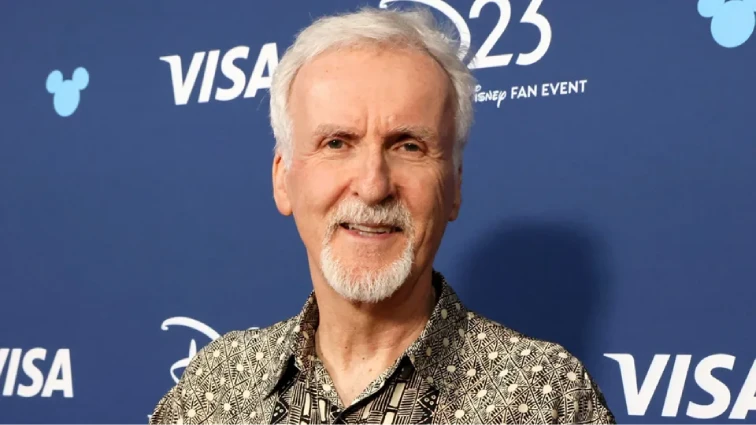
In 1977, a 23-year-old truck driver walked into a cinema in California, watched Star Wars, and walked out having completely changed the direction of his life. He had no film school degree, no industry connections, and no money. He just had an idea about what movies could be. Nearly five decades later, that same man is worth over a billion dollars, and he got there without selling a studio, without a streaming deal, and without inheriting a single cent of it.
That man is James Cameron, and the James Cameron net worth story is one of the most instructive in Hollywood history. Forbes placed his fortune at $1.1 billion in 2025, making him one of fewer than five film directors ever to officially reach billionaire status. Some sources, including celebrity net worth, put the figure closer to $800 million using a more conservative approach to valuing his assets. What both estimates agree on is that Cameron is extraordinarily wealthy, and that the bulk of that wealth was built through a series of financially brilliant decisions that had nothing to do with luck.
James Cameron: At a Glance
Before diving into the full story, here is a quick overview of the key facts and figures that define James Cameron’s career and financial journey.
| Category | Details |
| Full Name | James Francis Cameron |
| Date of Birth | August 16, 1954 |
| Place of Birth | Kapuskasing, Ontario, Canada |
| Nationality | Canadian |
| Net Worth (2026) | $1.1 billion (Forbes) / ~$800 million (Celebrity Net Worth) |
| Billionaire Status | Confirmed by Forbes as of 2025 |
| Primary Profession | Film Director, Producer, Screenwriter |
| Biggest Earning Film | Titanic (1997) – over $650M personal earnings |
| Second Biggest Film | Avatar (2009) – over $350M personal earnings |
| Total Box Office | Over $9 billion (all films combined) |
| Production Companies | Lightstorm Entertainment, Digital Domain, Earthship Productions |
| Real Estate Holdings | New Zealand, Malibu, California, Colorado, Texas, Canada |
| Notable Achievement | First solo descent to the Mariana Trench (2012) |
| Academy Award Wins | 3 Oscars for Titanic (Best Picture, Director, Film Editing) |
| Active Years | 1978 – Present |
From Truck Driver to Hollywood Titan
James Cameron was born on August 16, 1954, in Kapuskasing, Ontario, Canada. He was the oldest of five siblings, and his family relocated to California when he was 17. He enrolled at Fullerton College to study physics but dropped out after a year, finding himself adrift through various odd jobs including truck driving and working as a janitor. Nothing in those early years suggested the career that was coming.
Watching Star Wars in 1977 was the inflection point. Cameron quit his job almost immediately, spent his nights studying special effects techniques at university libraries, and started making his own short films on borrowed equipment. By 1978 he had directed and co-produced his first short film, Xenogenesis. It was rough and low-budget, but it caught the attention of B-movie producer Roger Corman, which opened the door to his first paid work in the industry.
The Smart Money Decisions Behind the Movies
Most people know Cameron as the director of some of the biggest films ever made. What fewer people appreciate is how deliberately he structured his financial deals. His wealth was not simply a byproduct of making popular movies. It came from a deep understanding of how money moves in Hollywood and a willingness to position himself to capture a much larger share of it than most directors ever attempt.
The Terminator Gamble That Started It All
Cameron’s first major financial decision was also his most unconventional. When he was trying to get The Terminator made in 1984, he was an unknown name with no real leverage. To secure the right to direct, he sold his story concept to producer Gale Anne Hurd for just one dollar. In exchange, she agreed to let him direct the film his way. The Terminator earned over $78 million on a budget of just $6.4 million, and it launched Cameron into the top tier of Hollywood directors almost overnight.
He lost control of future Terminator sequels and merchandise as a result of that deal, something he has expressed regret about since. But the upside was a career. He used The Terminator’s success to direct Aliens in 1986, The Abyss in 1989, and Terminator 2: Judgment Day in 1991. Each film pushed the limits of visual effects technology. Each one was a commercial hit. Cameron was steadily building the reputation and the clout that would later let him negotiate deals most directors could not even dream of.
The Titanic Backend Deal That Paid Over $650 Million
Nothing in Cameron’s career better illustrates his financial instincts than what he did with Titanic. The production budget spiraled from a greenlit $120 million to over $200 million. Studio executives were panicking. Convinced the film would be a catastrophic failure, they were looking for any way to cut their exposure. Cameron made a decision that stunned the industry: he voluntarily gave up his $8 million directing fee. In exchange, he kept his backend profit participation, meaning a percentage of the film’s net profits once it crossed certain financial thresholds. He also held onto his $1.5 million writing fee.
Titanic became the highest-grossing film in history at the time, earning over $2.19 billion worldwide. Cameron’s backend deal translated into a personal payday of more than $650 million from that one film. What looked like a desperate concession in a crisis turned out to be one of the most profitable financial bets ever made in the entertainment industry.
Avatar and the Record-Breaking Director Payday
Cameron applied the same backend approach to Avatar in 2009, and the results were even more extraordinary. Avatar became the highest-grossing film of all time, earning nearly $2.9 billion at the global box office. His profit-sharing deal earned him an estimated $350 million from that single film, setting an all-time record for a director’s earnings from one movie. In 2010 alone, the year following Avatar’s release, Cameron personally made an estimated $260 million.
Avatar: The Way of Water, released in 2022, added further to that total. The sequel earned over $2.3 billion worldwide, and Forbes reported Cameron made at least $95 million from it. Between Titanic and the Avatar franchise alone, Cameron has personally earned well over $1 billion, which is the foundation of his current net worth regardless of which estimate you use.
Beyond Films: The Business Empire Behind the Director
Cameron’s wealth is not purely the result of his films. Over his career he co-founded three production companies: Lightstorm Entertainment, Digital Domain, and Earthship Productions. These companies gave him greater ownership over his projects and created revenue streams beyond his directing fees. Lightstorm Entertainment has served as the producing entity behind his most successful films and continues to generate returns through licensing, home entertainment, and streaming deals.
He has also assembled a significant real estate and land portfolio. His holdings include a 5,000-acre ranch in New Zealand purchased in 2012 for $16 million, a multi-structure compound in Malibu listed for $25 million in 2020, properties in California, Colorado, Texas, and Manhattan Beach, and 10,000 acres of farmland in Saskatchewan, Canada. On that Canadian land, Cameron and his wife grow fava beans as part of an active plant-based protein food venture. Real estate and land ownership represent a meaningful and growing share of his overall financial picture.
A Deep-Sea Explorer, Not Just a Director
One thing that sets Cameron apart from other wealthy filmmakers is the scale of his life outside cinema. He has been a serious deep-sea explorer for decades, a passion seeded by his work on The Abyss and Titanic. In 2012, he became the first person ever to complete a solo descent to the Challenger Deep in the Mariana Trench, the deepest point in any ocean on Earth, reaching nearly 11 kilometers below the surface. National Geographic appointed him an Explorer-in-Residence in 2011, and he has produced several feature-length underwater documentaries.
His expeditions are not a direct source of income, but they reveal the mindset that has powered his financial success. Cameron has never been satisfied with doing what is already known to be possible. That same philosophy is what led him to spend over $500 million making Avatar when the technology to shoot it barely existed yet, and to trust that audiences would follow him there.
What Separates Cameron from Other Wealthy Directors
Cameron sits in a rare group of directors who have crossed or approached the billion-dollar net worth threshold. Steven Spielberg leads all directors at an estimated $10 billion, driven primarily by co-founding DreamWorks and securing a long-term theme park licensing deal with Universal. George Lucas follows at around $9 billion, the majority of which came from selling Lucasfilm to Disney for $4.1 billion in 2012. Peter Jackson sits at approximately $1.7 billion, with a significant portion coming from selling a stake in his visual effects company Weta Digital to Unity Software for $1.6 billion in 2021.
What makes Cameron’s wealth stand apart is how purely it comes from the craft of filmmaking itself. Lucas and Spielberg built substantial portions of their fortunes through studio ownership and corporate deals. Cameron built his by making movies and being shrewd enough to negotiate the right to share in the profits when those movies succeeded beyond all expectations. That is a rarer and, in many ways, a more direct form of creative wealth creation.
Final Thoughts
James Cameron’s financial story is ultimately about something simple: a person who believed in his own work more than anyone else did, and structured his career to be rewarded when that belief turned out to be right. He gave up guaranteed money on Titanic because he knew the film was going to be something extraordinary. He spent years developing Avatar’s technology because he was certain the audience would come. Both times, he was correct, and both times the financial reward was historic.
With Avatar: Fire and Ash now released and at least two more Avatar sequels still planned beyond it, Cameron is not close to done. Each new film represents another backend deal, another potential billion-dollar box office run, and another addition to a net worth that is already among the highest any filmmaker has ever achieved. The truck driver from Ontario who quit his job after watching Star Wars still has more chapters to write.