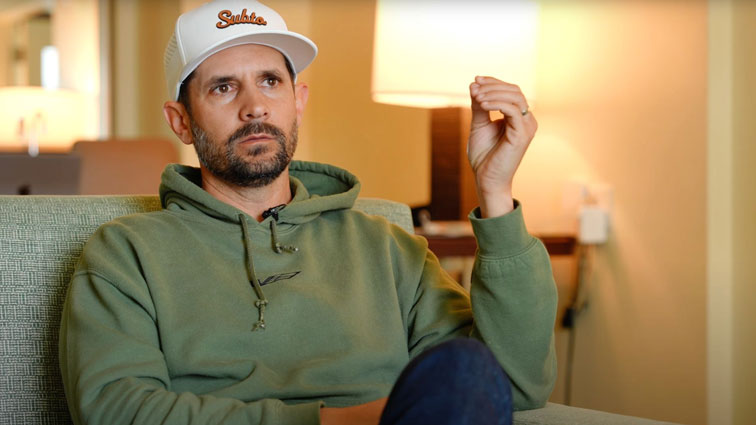
If you have spent any time in the creative real estate space, you have almost certainly come across the name Pace Morby. He is the investor behind the Subto community, the host of a national television show, and the person most associated with teaching everyday people how to buy property without using a bank. His story is not a simple overnight success. It took years of grinding through different businesses, making mistakes in public, and building a following through sheer consistency.
This celeb portal guide covers everything: his early life, how he got into real estate, what the Subto and Gator Method programs are, what his critics say, and where things stand for him in 2026.
Pace Morby Quick Facts
| Category | Details |
| Full Name | Pace Jordan Morby |
| Date of Birth | February 21, 1983 |
| Age | 43 years old (as of 2026) |
| Birthplace | Ogden, Utah, USA |
| Height | 5 ft 11 in (181 cm) |
| Weight | Approx. 81 kg (179 lbs) |
| Net Worth | Approximately $40 million (2025 estimate) |
| Profession | Real Estate Investor, Entrepreneur, TV Host, Author |
| Known For | Subject-to investing, Gator Method, Subto community |
| Company | Subto (Founder) |
| TV Show | Triple Digit Flip (A&E Network) |
| Books | “Wealth Without Cash” (WSJ Bestseller), “25 Exit Strategies Your Competition Doesn’t Know About” |
| Spouse | Laura Michelle Morby |
| Children | 3 (Corbin Michelle, Monday Jordan, Asher Charles Foss) |
| Education | Weber State University, Utah State University |
| Real Estate Portfolio | Over $450 million in total assets |
| YouTube Subscribers | Approx. 265,000 to 300,000 |
| Instagram Followers | 681,000+ (as of March 2026) |
| TikTok Followers | 876,000+ |
| Students Trained | Over 3,500 through Subto |
Early Life and Family Background
Pace Jordan Morby was born on February 21, 1983, in Ogden, Utah. He grew up in a working-class household with his parents Douglas Clair Morby and Carola McKell Morby. The family background was not wealthy, and Pace has talked openly about watching his father struggle financially, which left a mark on him from a young age.
He graduated from Pleasant Grove High School in 2001 and went on to study Business Management and General Studies at both Weber State University and Utah State University. He did not finish a traditional four-year degree, but picked up enough business fundamentals to start applying them in the real world.
One detail that rarely appears in other bios: Pace earned the rank of Eagle Scout. It is a small thing but tells you something about how he was wired early in life, goal-driven and committed to seeing things through.
Before Real Estate: Early Business Ventures
Most people think Pace jumped straight into real estate. He did not.
His first real work experience came in hands-on trades. He started working in garage floor epoxying, learning the basics of construction and home improvement from the ground up. That background gave him something most real estate educators lack: actual knowledge of what it costs and takes to fix a property.
In 2009, he co-founded Dixon Golf and served as chairman from 2009 to 2011. Dixon was a golf equipment company focused on eco-friendly products. Around the same time, he was involved in oil and gas through two companies called Arcadia Energy and Arcadia Holdings. Neither venture made him a fortune, but both added to his understanding of business structures, deal-making, and managing teams.
There is also a less discussed chapter from this period. A company he co-owned in Utah shut down around 2009 and could not pay its workers, who then filed complaints. His father Douglas Morby, the co-owner, was later convicted on a federal employee tax charge. Pace has not publicly addressed this in detail, but it is part of the record and worth knowing.
His real estate journey officially started when he purchased a HomeVestors franchise, the company known by its “We Buy Ugly Houses” branding. Running that franchise gave him his first real exposure to acquisitions, motivated sellers, and distressed properties. It also planted the seeds for everything that came after.
Building a Contracting Business
After the HomeVestors experience, Pace spent roughly ten years as a general contractor in Arizona. His company, AZ Contracting Group LLC, grew to around 175 employees at its peak and was completing 50 to 60 renovations per month. By his own account, the business was pulling in $15 million in revenue annually.
It was not as clean as it sounds. He has shared that a major client went bankrupt and left him holding around $1 million in unpaid bills. That near-collapse forced him to rethink everything. He started paying closer attention to the real estate investors he was working for, noticed how they were actually making money, and decided he wanted to be on their side of the table.
In 2021, his contracting company had its license revoked by the Arizona Registrar of Contractors due to seven separate violations. Critics have pointed to this as evidence of questionable business practices. Supporters argue that large contracting operations frequently run into code disputes and legal challenges, and that the revocation reflects the complexity of running a high-volume renovation business. Either way, it is a factual part of his history.
Transition Into Real Estate Investing
The pivot from contractor to investor happened gradually. One of the key people who helped him make the shift was Jamil Damji, who later became his co-host on television. Jamil introduced Pace to his first subject-to-deal, and that experience changed his direction completely.
Subject-to-investing, or “Subto,” is a strategy where a buyer takes over a seller’s existing mortgage payments without formally assuming the loan. The title transfers to the buyer, but the original loan stays in the seller’s name. The buyer makes the payments going forward. This approach lets investors acquire properties with little to no money down, which is exactly what attracted Pace to the method.
Between 2009 and 2022, Pace completed approximately 7,000 home renovations, built around 600 new homes, managed over 600 fix-and-flip projects, and executed more than 1,000 creative finance assignments. Those numbers reflect the volume of a contractor-turned-investor who was scaling aggressively.
His buy-and-hold portfolio now includes more than 2,100 acquired units across the United States, with total asset value industry observers estimate at over $450 million. His own equity position is what drives the net worth estimates.
What is Subject-To Investing?
Since this strategy is central to everything Pace teaches, it is worth explaining clearly.
In a traditional home purchase, you go to a bank, get approved for a mortgage, and the bank lends you money to buy the property. In a subject-to deal, you skip the bank entirely. Instead, you find a seller who has an existing mortgage and is motivated to hand over the property. You take title to the property, but the original loan stays in the seller’s name. You then make the monthly payments directly to the seller’s lender.
Why would a seller agree to this? Usually because they are in a difficult situation: facing foreclosure, going through a divorce, relocating quickly, or behind on payments. A subject-to deal lets them walk away without a foreclosure on their record.
There are real risks. Most mortgage loans include a “due-on-sale” clause, which means the lender can demand the full loan balance if the property is sold. In practice, lenders rarely enforce this clause as long as payments keep coming in, but the risk exists. Pace teaches his students how to structure these deals and manage that risk, though critics argue he downplays the legal exposure involved.
The Gator Method: Pace’s Second Major Strategy
The Gator Method is the part of Pace’s brand that most bio articles skip over, and it is a significant gap because it is searched almost as often as “Pace Morby biography” itself.
The Gator Method is a creative financing approach where investors act as short-term private lenders or capital providers for other investors’ deals. The name comes from the idea of moving like an alligator: fast, opportunistic, and willing to go after deals others overlook.
Here is how it works in practice. Suppose another investor finds a great deal but needs $15,000 for an earnest money deposit to lock up the contract. A Gator lender steps in, provides that capital for a fee or a share of the profits, and the deal gets closed. The original investor keeps the deal. The Gator gets paid back quickly, often within 30 to 90 days, with a return on their money.
The method has evolved significantly since Pace first introduced it. What started as Gator 1.0, focused primarily on earnest money deposits, has grown into Gator 2.0, 3.0, and 4.0. By 2026, Gator lending has expanded into partnership-style equity arrangements for larger commercial deals, giving investors a way to participate in transactions without traditional lending structures.
The Gator Method has its own dedicated community and program separate from Subto. It is particularly attractive to people who have some capital but do not yet want to own properties directly, as it allows them to deploy money into deals while learning the investing process from the outside.
The Morby Method: A Third Financing Strategy
Less widely discussed but worth knowing: Pace also developed what is called the Morby Method. This is a hybrid deal structure that combines elements of subject-to and seller financing. In a Morby Method deal, the buyer takes over the existing mortgage subject-to while the seller also carries a portion of the purchase price as a second note. The buyer ends up with two obligations: the existing mortgage payments and a seller-financed second loan, but potentially acquires the property with zero traditional bank involvement and minimal cash out of pocket.
A real example shared by a Subto community member involved a $340,000 property where the seller had $256,771 in existing debt and was willing to carry 15% of the purchase price as seller financing. The buyer took over the mortgage payments and made a second monthly payment to the seller, and the property changed hands without a bank loan at all.
The Subto Community and Education Business
Pace founded Subto in 2019 as an educational platform to teach his creative financing strategies to other investors. It has since grown into one of the most active real estate investing communities in the country.
The Subto membership is a lifetime purchase, which Pace positions as a differentiator from subscription-based programs. Pricing ranges from $7,000 to $11,000 depending on the tier. Members get access to a large content library covering creative financing, probate, foreclosures, wholesaling, door knocking, expired listings, and more. Pace has also shared his own legal documents and contracts with the community, which get updated regularly.
Over 3,500 students have completed the program. Many have gone on to close their own deals and build portfolios. The Subto community also runs events called the Elephant Challenge and the No One Left Behind Challenge, which push new members to close their first deals within a short timeframe.
Between 2016 and 2022, Pace personally invested around $600,000 of his own money into grassroots marketing, traveling to cities and hosting free events to build awareness before Subto existed in its current form. That investment in community building is what gave the platform its loyal base.
Is Subto Legitimate or a Scam?
This is one of the most searched questions about Pace Morby, so it deserves a direct answer.
Subto is a real program that teaches real strategies used by real investors. Subject-to investing is a legitimate method that has existed in real estate long before Pace popularized it. The Gator Method is a real financing approach. The Morby Method is a real deal structure. None of these are made-up concepts.
At the same time, the program has attracted serious criticism. Some students report feeling misled by the sales process. Others say the strategies are harder to execute than the marketing suggests. A small number of people have reported being enrolled and charged without clear consent, including a complaint about a $3,000 charge through a payment service that the person claims they never authorized.
Trustpilot reviews are split: enthusiastic supporters who say the community changed their lives sit alongside strongly negative reviews from people who feel they wasted their money. The negative reviews tend to come in steadily and randomly over time, while spikes in positive reviews sometimes coincide with promotions, which some observers see as a sign of organized review campaigns.
The honest answer is this: the strategies Pace teaches can work. Whether Subto is worth $7,000 to $11,000 for any given person depends entirely on their starting point, their work ethic, and their ability to apply the material. For someone with no real estate background who is willing to put in serious effort, there is real value in the community and content. For someone looking for a passive shortcut, it will likely disappoint.
Pace himself has stated publicly that he does not personally receive money from Subto sales, with revenues directed to an entity called New Reach. This is unverified by independent sources.
Television Career: Triple Digit Flip on A&E
Pace co-hosts Triple Digit Flip on the A&E network alongside his longtime friend and business partner Jamil Damji. The show follows their team as they flip houses across the Phoenix area, targeting deals that will generate $100,000 or more in profit. Also featured on the show is Jamil’s sister Rahima Blaza as project manager, and Pace’s wife Laura Michelle Morby in her role as a real estate agent.
What makes the show unusual is that Pace and Jamil are actual competitors in the Phoenix real estate market who chose to collaborate rather than fight over deals. The format shows real challenges, real cost overruns, and real decisions rather than the polished, problem-free flips that dominate most home improvement programming.
The show has brought Pace’s name to a much broader audience beyond real estate investors and contributed significantly to the credibility of creative financing in mainstream conversation.
Books and Podcast
Pace has authored two books. “Wealth Without Cash: Supercharge Your Real Estate Investing with Subject-to, Seller Financing, and Other Creative Deals” became a Wall Street Journal bestseller and is the most accessible introduction to his investing philosophy. His second book, “25 Exit Strategies Your Competition Doesn’t Know About,” covers deal exit options for investors at different stages. He also released a free A-to-Z e-book about Subto available through his website.
His podcast, “Get Creative with Pace Morby,” runs on major podcast platforms including Apple Podcasts and releases new episodes weekly. Episodes feature Subto community members sharing their deal stories, interviews with other investors, and conversations about creative financing strategies. It has built a dedicated listener base in the real estate community.
Social Media Presence
Pace has built one of the largest followings of any real estate educator across multiple platforms.
On YouTube, his channel has between 265,000 and 300,000 subscribers and has accumulated over 37 million views. The content ranges from deal breakdowns and strategy explanations to student success stories and conversations with other well-known investors.
On Instagram, he has grown past 681,000 followers as of early 2026, a significant jump from the 460,000 figure that appears in older bios. His content mixes motivational posts with real estate education and behind-the-scenes glimpses of his deals and life.
On TikTok, he has over 876,000 followers and 1.6 million likes, making him one of the more prominent real estate voices on the platform. He has appeared on numerous external podcasts including BiggerPockets, Brad Lea’s Dropping Bombs, Real Estate Disruptors, and conversations with Grant Cardone and Codie Sanchez.
Net Worth and How He Makes Money
The most reliable estimates put Pace Morby’s net worth at approximately $40 million as of 2025. Some sources suggest figures significantly higher based on total portfolio value, but the $40 million figure is the most consistently cited and appears the most defensible when accounting for debt on the portfolio.
His income comes from several directions. His real estate holdings generate rental income and appreciation across thousands of units. Strategic property sales add to that. His educational business through Subto generates revenue from program enrollment, though he claims he does not personally profit from this. The A&E television show adds another income stream. YouTube advertising and brand partnerships on social media bring in additional money, though these are likely smaller contributors relative to the real estate side.
Here is how his wealth has grown over time based on available estimates:
| Year | Estimated Net Worth |
|---|---|
| 2015 | $5 million |
| 2018 | $12 million |
| 2020 | $20 million |
| 2021 | $25 million |
| 2022 | $30 million |
| 2023 | $35 million |
| 2024 | $38 million |
| 2025 | $40 million |
Personal Life
Pace is married to Laura Michelle Morby, who works as a real estate agent and appears on Triple Digit Flip. They have three children together: two daughters named Corbin Michelle and Monday Jordan, and a son named Asher Charles Foss.
Family features prominently in his social media content, and Pace frequently cites his children as a core motivation for the financial path he has chosen. The idea of building generational wealth is something he comes back to regularly in his teaching and public content.
One unusual biographical detail: Pace is fluent in both English and Korean. This has helped him connect with a more diverse audience and build relationships internationally.
Recognition and Industry Standing
Pace was named the number one Closer on Real Estate Disruptors, a recognition of his deal-making and negotiation skills within the creative finance community. He received the GoGiver Award, which recognizes individuals who prioritize adding value to others rather than extracting it. His Eagle Scout rank from his youth reflects a pattern of goal-setting and follow-through that predates his business career.
Endorsements from well-known figures in the investing world have added to his credibility. Grant Cardone, Graham Stephan, and Codie Sanchez have all spoken positively about his work publicly.
Criticism and Controversy
A complete biography includes the uncomfortable parts, and Pace Morby’s story has some.
His Arizona contractor’s license was revoked in 2021 following seven separate violations through AZ Contracting Group LLC. Critics see this as evidence of a pattern of cutting corners. Supporters view it as a regulatory dispute common in high-volume contracting.
Critics also raise concerns about subject-to-investing itself. The due-on-sale clause in most mortgages is a real legal risk that Pace’s promotions sometimes minimize. Some real estate attorneys and investors argue that the strategy exposes both buyers and sellers to significant liability if lenders choose to enforce that clause.
The Morby Method has been described by some reviewers as legally risky and difficult to execute. At least one critic noted that illegal “net listings” have come up in discussions around some of his strategies, which in most states could put a real estate license at risk.
The pricing of his programs has also drawn scrutiny. At $7,000 to $11,000 for Subto and separate costs for Gator enrollment, the financial commitment is significant for people who are new to investing. Whether students get enough value to justify those prices depends heavily on the individual. His personal business history in Utah from around 2009, involving a company that could not pay its workers and a father who faced federal tax charges, is also part of the public record.
None of this makes Pace Morby a fraud. The strategies he teaches are real and have worked for many people. But anyone considering spending thousands of dollars on his programs should go in with clear eyes about both what the programs offer and the background of the person behind them.
Where Things Stand in 2026
At 43 years old, Pace Morby remains one of the most active and visible names in creative real estate. His community continues to grow. His television presence keeps his name in front of mainstream audiences. The Gator Method has evolved well beyond its original form and is now being used in commercial real estate transactions, not just residential flips.
The Creative Nation Tour, which he announced for 2026, is bringing him to cities across the country to meet students and build the community in person. The SquadUp Summit is another live event he runs to bring investors together.
His influence on how a generation of investors thinks about real estate financing is significant regardless of where you land on the controversy. Subject-to and seller financing existed before he arrived, but he made them accessible, gave them memorable names, and built a community around practicing them at scale.
Conclusion
There are a few things that stand out from looking at his career as a whole.
He did not start in real estate. He came through trades, entrepreneurship failures, and a decade of contracting before finding his path. That non-linear background is part of why his approach to real estate looks different from investors who came up through traditional finance or brokerage careers.
He invested heavily in the community before it paid off. The $600,000 he spent on grassroots events between 2016 and 2022 was not a guaranteed return. It was a bet on the idea that building a network of real people doing real deals would eventually create more value than any single property.
He also shows that personal brand and business success are not the same thing. He has built an enormous following. He has made genuine money in real estate. He also carries real controversies and a complicated business history. Those things can all be true at the same time.