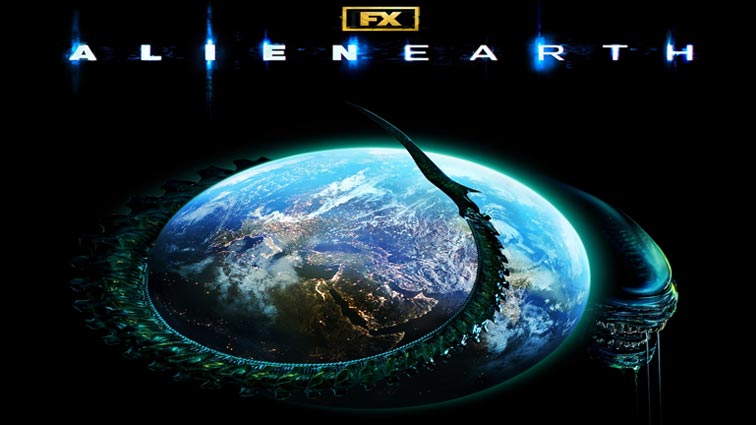
For more than four decades, the Alien franchise has thrived on distance, far-off planets, isolated crews, and the cold emptiness of space. Alien Earth destroys that comfort zone entirely. By bringing the terror home, the series makes its most daring creative decision yet, transforming a familiar sci-fi horror universe into something more intimate, unsettling, and disturbingly plausible.
This is not a nostalgic retread or a safe expansion of existing lore. Alien Earth is a reinvention that understands what made Alien terrifying in the first place, and why that fear hits harder when there is nowhere left to escape.
Horror Without Distance
Setting the story on Earth fundamentally changes the nature of fear. Space has always acted as a buffer in Alien stories, a place so remote that audiences could compartmentalize the danger. Earth removes that barrier. Familiar cities, industrial zones, and controlled corporate environments become sites of dread, making the threat feel immediate rather than theoretical.
The series uses this setting to amplify psychological horror. Instead of relying on constant creature reveals, it builds unease through atmosphere, implication, and the slow realization that humanity’s own systems, corporations, technology, and ambition, are what allow the nightmare to exist. The result is a quieter, more suffocating tension that lingers long after individual scenes end.
A Return to True Alien Fear
Unlike recent franchise entries that leaned toward action or mythology overload, Alien: Earth reclaims the franchise’s most powerful weapon: restraint. Violence is rare, but when it arrives, it is abrupt and unforgiving. The show understands that fear comes not from excess, but from anticipation, from the knowledge that death can arrive without warning and without heroics.
This approach makes the series feel closer in spirit to Ridley Scott’s original Alien than any entry in decades, without copying it. The horror is modern, confident, and patient, trusting the audience to sit with discomfort rather than demanding constant stimulation.
Characters Who Feel Expendable — and Human
One of Alien: Earth’s greatest strengths is its treatment of character. There are no invincible leads, no obvious survivors, and no cinematic shields. Every character feels vulnerable, and that vulnerability matters. Their decisions are driven by fear, self-interest, loyalty, and confusion, not plot convenience.
By grounding the story in flawed, emotionally believable people, the series restores one of the franchise’s most important traditions: the sense that survival is never guaranteed. This uncertainty fuels the tension and makes every interaction feel consequential.
Themes That Justify the Setting
Beyond horror, Alien: Earth uses its Earthbound premise to explore ideas the franchise has always flirted with but rarely examined this closely. Questions of identity, artificial life, corporate dominance, and moral erosion sit at the center of the narrative. The series suggests that the real danger is not the creature itself, but humanity’s willingness to create, exploit, and weaponize forces it cannot control.
These themes feel timely rather than recycled, giving the series intellectual weight without slowing its momentum. The horror works because it is rooted in recognizable human behavior, not abstract sci-fi concepts.
Visual Storytelling Over Spectacle
Visually, Alien: Earth avoids flashy excess. Production design favors texture, shadow, and scale over spectacle. Industrial environments feel lived-in and oppressive, reinforcing the sense of entrapment. The creature design is used sparingly, preserving its impact and mystique instead of turning it into background noise.
Sound design plays an equally important role. Silence, mechanical hums, and distant echoes are used to heighten anxiety, often proving more effective than dialogue or music.
Why This Chapter Matters
Alien: Earth succeeds because it takes real risks. It refuses to rely on nostalgia, rejects over-explaining its mythology, and trusts viewers to engage with slow-burn storytelling. By doing so, it repositions the franchise as serious, prestige sci-fi horror rather than franchise content built for volume.
This series does not just expand the Alien universe, it challenges it. And in doing so, it reminds audiences why the franchise mattered in the first place.
Final Verdict
Alien: Earth is bold because it understands that evolution, not repetition, is the only way forward. By bringing the horror home, stripping away safety nets, and focusing on atmosphere, character, and theme, the series delivers one of the most confident and unsettling entries in the franchise’s history.
This is Alien made dangerous again, and that is exactly why it works.