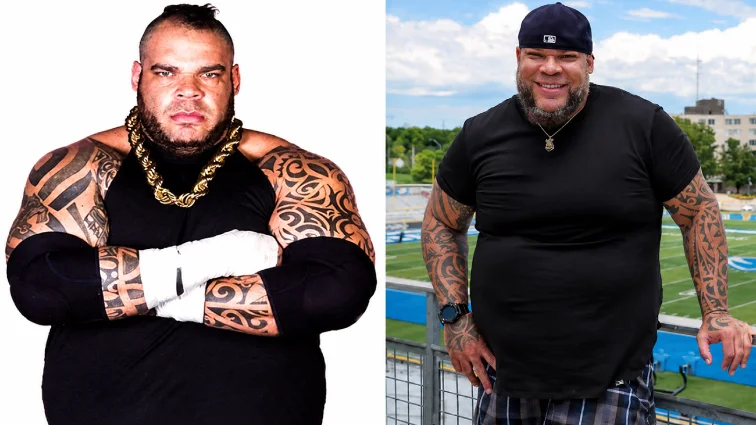
Most people know Tyrus as the 6’7″ powerhouse who spent years throwing opponents around wrestling rings. But the story getting attention lately has nothing to do with finishing moves or championship belts. The Tyrus weight loss journey, which saw him drop over 125 pounds from a peak of nearly 500 pounds, is the kind of transformation that makes you stop and pay attention. Not because of the number on the scale, but because of the honesty behind it.
This is not a story about a celebrity who hired a team of nutritionists and had a dramatic before-and-after photoshoot. It is a story about a man in his early 50s who got real with himself, made some unglamorous daily changes, and slowly reclaimed his health one decision at a time.
Tyrus Weight Loss Quick Facts
| Category | Details |
| Full Name | George Murdoch (Tyrus) |
| Age | 53 years old |
| Height | 6 feet 7 inches |
| Peak Weight | Approximately 489 pounds |
| Current Weight | Just over 300 pounds |
| Total Weight Lost | 125+ pounds |
| Primary Diet Approach | Intermittent fasting, two protein shakes, one whole-food meal daily |
| Exercise Style | Functional training, light weights, stretching, cycling |
| Key Motivation | Family, health longevity, and personal accountability |
| Weight Loss Method | Natural, no surgery or medication |
A Career Built Around Being Big
Tyrus, whose real name is George Murdoch, built his entire professional identity around his size. He played college football for the Nebraska-Kearney Lopers before injuries steered him toward professional wrestling. He signed with WWE in 2006, and after being released, returned in 2010 as Brodus “The Funkusaurus” Clay, a fan-favorite character full of energy and personality.
Through all of it, being a big man was not a problem. It was the job. His frame was his asset. So it is not hard to understand why, for a long time, Tyrus did not see his weight as something that needed fixing.
“The stuff you will say to make yourself okay with not being okay is amazing,” he reflected in an interview with Muscle and Fitness. That sentence says more than any before-and-after photo ever could. When he was working security at clubs early in his career and weighed over 400 pounds, he was still the lightest guy on the crew. That kind of environment makes it very easy to normalize something that quietly keeps getting worse.
Between his WWE runs, Tyrus spent time working as a bodyguard for Snoop Dogg. He has joked that Snoop can eat whatever he wants without gaining a pound, but Tyrus did not share that ability. When he returned to WWE, his weigh-in showed 498 pounds. He had left at 333. That is 165 pounds gained in roughly two years. “I didn’t realize I had gotten so fat. It’s no excuse, it’s just you will see whatever you want to see,” he admitted.
The Retirement Wake-Up Call
When Tyrus officially retired from wrestling in 2023, following his run as NWA World Heavyweight Champion, the structure that had kept him training disappeared almost overnight. For someone whose identity had been tied to physical strength for decades, that transition hit hard.
Without the demand of regular training sessions and matches, his motivation to work out faded. He gained around 75 pounds in a single year after retirement, reaching close to 489 pounds at his heaviest. He described pulling into the gym parking lot, seeing one extra car, and using it as an excuse to turn around and go home.
I went through a period where I would just kind of be there. Feeling kind of lost, I had some insecurity issues with the gym,” he told Men’s Journal. “So every reason to skip became an easy excuse. Literally, I’d pull up in the parking lot and see one extra car. ‘It’s crowded. Can’t go today. I’ll go tomorrow.’
The real turning point came from two things that hit closer to home. First, the physical signs became impossible to ignore. He was getting winded walking up stairs. He needed a cane to get around. His joints ached constantly after even basic movement. Second, and more sobering, was watching former teammates and peers with similar body types pass away from heart issues in their late 40s and early 50s.
“I have young children, and I would like to be there for them,” he said. “I found something to train for. Before I trained for sports, I trained for the glory of being a 500-pound bencher and all that good stuff. And now I’m training just to have more days.”
What He Actually Changed
The Diet: Simple and Consistent
When people search for the Tyrus weight loss diet, they are probably expecting something complicated. The reality is refreshingly simple. His daily nutrition is built around two protein shakes and one whole-food meal, usually steak and vegetables, paired with intermittent fasting.
What He Eats Every Day
Tyrus keeps his meals straightforward. Two protein shakes cover most of his daily intake, and one whole-food meal, usually steak and vegetables, rounds out the day. No calorie counting, no complicated meal plans.
Why Intermittent Fasting Works for Him
Intermittent fasting works by limiting the hours you eat, which naturally reduces overall calorie intake without requiring you to track every meal. For someone like Tyrus who struggled with emotional eating, having a clear eating window also removes a lot of the daily decision-making around food, which makes the habit easier to stick with over time.
Breaking the Emotional Eating Habit
He has spoken openly about his old relationship with food. Bad days used to end with whatever was in reach. “Before, if I was having a bad day, I’d grab a Snickers, or a sandwich or twenty,” he said with a laugh. Learning to separate emotions from eating was as important as any specific food choice he made.
The Role His Wife Played
Ingrid Rinck, his wife, runs her own fitness company focused on portion-controlled meals and virtual workout classes. She played a meaningful role in helping him rethink how he approached food and training. Having that support at home made a difference that no gym membership alone could provide.
Did He Use Ozempic or Surgery?
Some people have wondered whether weight loss surgery played a role in his results. It did not. Similarly, those asking about Ozempic will find the answer is the same. He has been clear that his results came from changing what he eats, how he moves, and how he thinks, without shortcuts or medication.
Note: The approach Tyrus follows works for his specific body type, size, and health history. If you are considering a similar diet or fasting routine, speaking with your doctor first is always the right move, especially if you have any existing health conditions.
The Training: Working Smarter, Not Heavier
During his wrestling years, Tyrus trained four days a week in sessions lasting around three hours. The focus was raw strength and power. That approach no longer works for his body, and more importantly, it is no longer the goal.
From Heavy Lifting to Functional Movement
“I would bench, and let’s say I’d finished 405 for 15 reps. When I was in my prime, I didn’t really have to rest after that,” Tyrus told Men’s Journal. “The next day, I would just do my regular lift. Doing that now? It would take me two days just to recover from the fatigue, the joint aching, the shoulder, and the back hurting. Everything started to hurt.”
Working with coach Rob MacIntyre, he shifted his focus entirely. The big lifts like bench and squat remain in his routine, but the emphasis is now on movement quality rather than maximum weight.
What His Workouts Look Like Now
His sessions include high-rep work with lighter loads, resistance bands, rope exercises, cycling, and thorough warmups. He trains four days a week and treats each session as maintenance and mobility work rather than a performance test.
Why This Approach Makes Sense After 50
As the body ages, it takes longer to repair muscle tissue and joints after heavy loading. Switching to higher reps with moderate weight keeps the muscles working and builds endurance without placing the same stress on connective tissue. For athletes over 50 with years of physical wear, this approach produces more consistent results with far fewer setbacks.
“My trainer said why are you still lifting heavy? What do you have left to prove?” Tyrus recalled.
The Stretching Factor
Stretching became something he credits more than people might expect. For a body that has absorbed years of wrestling, football, and general wear, mobility work has given him back a quality of movement he thought was gone for good.
The Mindset: The Hardest Part of All
None of the diet or training changes would have stuck without what Tyrus describes as an honest conversation with himself. Not the kind of self-talk that sounds motivational but ultimately lets you off the hook. The real kind, where you stop making excuses and start facing things directly.
“The energy you take to cover up your B.S. If you just faced it in the mirror, it’ll be so much better for you,” he said.
He no longer tries to convince himself that carrying nearly 500 pounds is fine because everyone around him is big too. He stopped using busy schedules and travel fatigue as reasons to skip workouts.
One practical lifestyle change that helped more than expected was reducing travel. As a wrestler, Tyrus was constantly on planes, and his trainer explained that flight pressure causes significant water retention. He would gain up to 12 pounds on a single flight and dealt with swelling in his knees regularly. After moving to New Jersey to be closer to his broadcasting work, the constant travel stopped, and so did those compounding physical setbacks.
The Results
The Tyrus weight loss results speak for themselves. Within just one month of sticking to his new approach, he lost 27 pounds. Over time, he dropped to just over 300 pounds while maintaining muscle. One of the milestones he has been most vocal about is throwing away his walking cane. “I could not wait to see how far I could chuck that thing down my yard, because I was done with it,” he said.
Beyond the numbers, Tyrus says the biggest revelation was realizing just how miserable he had been at his heaviest, and how much better life feels now. His next goal is getting under 300 pounds, and based on the consistency he has shown, it is a realistic target.
Conclusion
Tyrus is not a health guru. He does not pretend the process was easy or that he figured it all out perfectly. What makes his story worth paying attention to is the honesty he brings to it. He acknowledges the self-deception that comes with being overweight.
He talks openly about emotional eating, gym avoidance, and the strange comfort of surrounding yourself with people who make your situation feel normal. The practical lessons from his journey are straightforward. Eat mostly protein and whole foods, keep portions consistent, use fasting to manage intake without obsession, and find a form of exercise that your body can actually sustain.
But perhaps the most useful thing he keeps repeating is this: “Talk to the person in the mirror, lead by example, and people will want to talk to you about it when they see the results of you being a better you.” That shift in perspective, more than any specific diet or workout plan, is what started moving things in the right direction for him. At 53, Tyrus is in better health than he has been in years. He is more mobile, more energetic, and by his own account, genuinely happier.