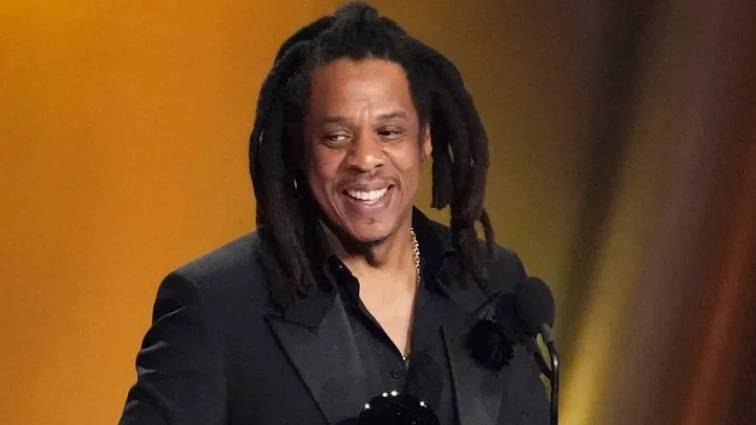
There is a moment in Jay-Z net worth story that tells you everything. He was a teenager in Brooklyn’s Marcy Houses, writing rap lyrics on paper bags because he could not afford a notebook. His father had walked out. His school had shut down. The neighborhood he grew up in was so dangerous it was eventually demolished. And yet, the man who came out of all that now sits on a fortune that makes most corporate executives look modest.
Jay-Z’s net worth in 2026 is estimated at $2.8 billion by Forbes (updated April 2026), making him the wealthiest musician alive and the first billionaire rapper in history. Earlier in the year some outlets cited $2.5 billion; the figure has since been revised upward as his spirits portfolio and investment exits have continued to compound. But the number is almost beside the point. What matters is the story behind it, how a self-made entrepreneur turned a music career into a diversified empire built on equity stakes, cognac deals, and venture capital.
Jay-Z Quick Facts
| Detail | Information |
| Full Name | Shawn Corey Carter |
| Stage Name | Jay-Z |
| Date of Birth | December 4, 1969 |
| Place of Birth | Brooklyn, New York, USA |
| Nationality | American |
| Age | 56 |
| Net Worth | $2.8 billion (Forbes / CelebrityNetWorth) |
| Primary Source of Wealth | Business ventures, investments, spirits empire |
| Spouse | Beyoncé Knowles-Carter (married 2008) |
| Children | Blue Ivy Carter, Rumi Carter, Sir Carter |
| Record Label Founded | Roc-A-Fella Records (1995) |
| Entertainment Company | Roc Nation (2008) |
| Venture Capital Firm | Marcy Venture Partners (2018) |
| Grammy Awards | 25 (tied by Kendrick Lamar at 2026 ceremony) |
| Solo Studio Albums | 13 |
| Albums Sold (US) | Over 33 million copies |
| First Billionaire Status | 2019 |
| Key Business Exits | Rocawear ($204M), D’Usse partial sale ($750M), Tidal ($300M), Armand de Brignac 50% to LVMH at $640M valuation |
From Brooklyn to Billionaire
Shawn Corey Carter was born on December 4, 1969, in Brooklyn, New York. Now 56, he was raised by his mother after his father left the family, and he grew up moving between schools in one of the city’s toughest neighborhoods. Music became his escape.
When his mother gave him a boombox for his birthday, he started writing lyrics and freestyling obsessively. Two of his high school classmates would go on to become The Notorious B.I.G. and Busta Rhymes, which tells you something about the talent concentrated in those few Brooklyn blocks.
The music industry did not make things easy for him. Record label after record label turned him away. Most people, facing that kind of rejection, would have found a different path. Jay-Z did something else entirely.
Building the Foundation: Roc-A-Fella Records
In 1995, unable to get a deal, Jay-Z co-founded his own independent label. Roc-A-Fella Records was started with partners Damon Dash and Kareem Burke, and the three of them pressed their own CDs and sold them out of car trunks. By owning the label, Jay-Z retained control over his master recordings and publishing rights from the very beginning, a decision that would prove worth hundreds of millions of dollars later in his career.
The debut album, Reasonable Doubt, came out in 1996 and earned strong reviews. His follow-up albums climbed the Billboard 200. By 1998, Vol. 2… Hard Knock Life debuted at number one and went platinum multiple times over. He had become one of the most commercially successful rappers alive, and he had done it on his own terms.
The Business Mind Behind the Music
What separates Jay-Z from nearly every other artist of his generation is not his talent, though that is considerable. It is his understanding that music was a platform, not a destination. When you look at lists ranking celebrities net worth, the ones who sit at the very top almost always share that same instinct: they treated their fame as the starting line, not the finish.
Rocawear and the First Big Sale
In 1999, Jay-Z and Damon Dash launched Rocawear, a clothing line that quickly became a cultural force. At its peak, Rocawear was generating over $700 million in annual revenue, making it one of the most valuable hip-hop fashion brands ever built. In 2007, Jay-Z sold the rights to the brand to Iconix Brand Group for $204 million in cash, while keeping a role in marketing and licensing. That single licensing deal added more to his net worth than most musicians earn across an entire career.
Roc Nation: Building an Empire
In 2008, he founded Roc Nation, a full-service entertainment company that handles artist management, sports representation, touring, and production. The company has grown into one of the most powerful in the entertainment industry, managing artists like Rihanna and producing major events including the Super Bowl halftime show through a long-term NFL partnership. Roc Nation is not just a talent agency, it is a wealth engine that earns fees and equity across multiple entertainment verticals simultaneously.
The Spirits Play: D’Usse and Armand de Brignac
Perhaps the most instructive chapter in Jay-Z’s financial story involves the premium spirits market. In 2012, he partnered with Bacardi to launch D’Usse, a luxury cognac brand. He did not simply endorse the product for a flat fee the way most celebrities do, he took an equity stake in the brand itself.
He pulled off a similar move with Armand de Brignac champagne, which he acquired outright in 2014 after boycotting Cristal following dismissive comments from that brand’s leadership about hip-hop. In 2021, luxury conglomerate LVMH purchased a 50% stake at a valuation of $640 million. Jay-Z retained the other half.
Both deals follow the same logic: build or acquire a brand, grow its equity value using cultural influence that no advertising budget can replicate, and sell a stake at a premium when the brand valuation reflects that growth.
What His Portfolio Looks Like Today
By 2026, Jay-Z’s wealth is spread across several areas that continue to grow without requiring him to release new music or go on tour.
Music Catalog and Live Nation Deals
His 13 solo studio albums have sold over 33 million copies in the United States, with every single one receiving at least platinum certification. He owns both the master recordings and the publishing rights to his music catalog, rights he fully secured around 2013-2014 during his tenure as Def Jam president.
In 2017, he signed a 10-year touring partnership with Live Nation worth $200 million, ensuring that any future touring activity generates substantial income. His On the Run and On the Run II tours with Beyoncé grossed a staggering $364 million combined.
Investments and Venture Capital
Beyond entertainment and spirits, Jay-Z has built a meaningful investment portfolio spanning technology and consumer goods. He co-founded Marcy Venture Partners, a venture capital firm backing early-stage startups across sectors where his network and brand give him access other investors simply do not have.
His most discussed early-stage investment was a stake in Uber, where roughly $2 million grew to an estimated $70 million as the company scaled. His portfolio companies span fintech, AI, and consumer brands.
Real Estate
Jay-Z and Beyoncé own one of the most valuable real estate portfolios in American entertainment. Their holdings include properties in New York, the Hamptons, and Los Angeles. In 2017, the couple paid $88 million for a mansion in Bel Air.
In May 2023, they made headlines by purchasing a 30,000-square-foot property in Malibu for $200 million, setting the record for the most expensive home ever sold in California. Together, their real estate holdings are estimated to exceed $350 million.
Grammy Record
Jay-Z’s 25 Grammy Awards still represent one of the most decorated careers in music history, and he remains the rapper with the second-most Grammy wins all-time alongside his broader cultural legacy.
The Lesson That Runs Through Everything
If there is a single principle that explains how a kid from the Marcy Houses ended up with $2.8 billion, it is this: he never confused being famous with being wealthy. Fame opens doors. Ownership builds lasting wealth.
At every stage of his career, Jay-Z looked for ways to own the thing rather than simply participate in it. Rather than signing to a label, he built his own. Instead of endorsing brands, he acquired them. When others took fees, he took equity. He invested $56 million into Tidal in 2013 and sold it to Square for $300 million in 2021, not a life-changing exit on its own, but part of a consistent pattern of ownership-first thinking across every deal he touched.
Compare that to artists who took flat endorsement fees for spirits brands that later sold for billions, the difference between participation and ownership is the entire story. That mindset is what turned a music career into a business empire, and a business empire into a generational fortune.
Jay-Z Net Worth Growth Timeline (2009 to 2026)
The numbers tell the story of a musician who steadily shifted his wealth engine from music to business, with dramatic leaps tied to equity exits rather than album releases or tours.
| Year | Estimated Net Worth | Key Wealth Driver |
| 2009 | $300 million | Music catalog, touring, Rocawear royalties |
| 2012 | $475 million | Roc Nation growth, endorsements |
| 2013 | $500 million | Business expansion, investments |
| 2015 | $600 million | Tidal acquisition, spirits ventures |
| 2017 | $700 million | Live Nation deal ($200M), real estate |
| 2019 | $930 million | Equity appreciation, Roc Nation valuation |
| 2020 | $1 billion | First billionaire rapper milestone |
| 2021 | $1.1 billion | Tidal sold to Square for $300M; LVMH buys 50% of Armand de Brignac |
| 2022 | $1.3 billion | Continued portfolio growth |
| 2023 | $2 billion | D’Usse partial stake sold to Bacardi ($750M cash) |
| 2024 | $2.2 billion | Roc Nation, investments, real estate appreciation |
| 2025 | $2.5 billion | Marcy Venture Partners exits, spirits royalties |
| 2026 | $2.5 billion | Diversified empire; Forbes updated figure |
What stands out in this timeline is that Jay-Z’s wealth did not grow in a straight line. It accelerated in bursts, each one tied to a major equity exit. The music created the platform. The business deals created wealth.
Conclusion
Jay-Z’s story is not really about rap music, though his music is extraordinary. Instead, it shows what happens when someone with real talent refuses to accept the terms others settle for. From building Roc-A-Fella from nothing to selling Rocawear for $204 million, his moves consistently reshaped his career.
A cognac brand later became a $3 billion transaction, proving his business instincts. Throughout it all, he continued creating music that shaped a generation. By 2026, the empire he built continues to grow on its own momentum. That is the real measure of what he has accomplished.