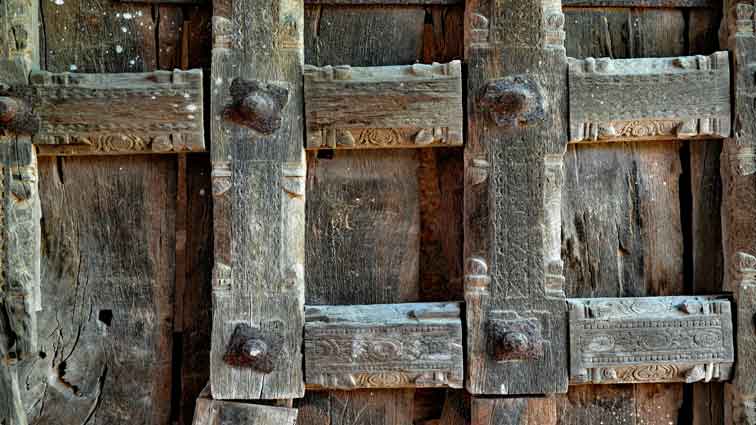
Did you find little spots or patches on your wood furniture? High chances are they might be mold. Along with destroying the appearance of the wood, it can cause breathing diseases as well. So, by knowing how to remove mold from wood furniture, you can minimize the damage.
You can easily remove mold from any wood furniture piece with just a few cleaning essentials and protective gear.
What Is Mold And How Does It Grow?
Mold is a fungus that grows in wet, warm environments, particularly on porous surfaces. It readily develops colonies on wood surfaces, metals, plaster walls, fabrics, synthetic fibers, and concrete. It only needs a food source, warm temperature, and moisture to grow.
It has a cottony texture with white color. However, it also has black, pink, and yellow colors in some cases.
How Mold Destroys Wood Furniture?
The primary material wood has is cellulose. It is the reason why wood is strong and durable. When mold spores grow on wood, they feed on its cellulose and lignin. Since wood is porous and has hidden cracks and holes, mold penetrates easily and eats away the material. It causes weakening, crumbling, and cracking in the wood.
Moreover, it can slowly deteriorate the appearance of the furniture. The wood might look discolored, disintegrated, and badly stained.
Once they start developing their colonies and you do not treat the wood on time, they produce unpleasant odors. Sometimes, its stains are not visible, and it causes trouble to clear them off from furniture.
Its spores (if inhaled for an extended time) can cause severe breathing issues and other health concerns. Black molds can be particularly toxic to health. Hence, you should have proper tools and techniques to combat the issue as rapidly as possible.
TOOLS & MATERIALS Required for Mold Removal From Wood
There are many ways to remove mold from wood. These are the top tools you would need, depending on the severity of the wood’s condition.
| Scrub Brush | Rubber Gloves | Spray Bottle |
| Vacuum cleaner | Bleach | Cloth/Towel |
| Safety Goggles | Respirator Mask | Sandpaper |
| Dishwashing detergent | Vinegar | Sponge |
What To Do Before Removing Mold?
Since you might get in contact with chemicals and harmful mold spores while treating them, it is necessary to wear chemical protective clothing. Always wear long-sleeved shirts, coveralls or old clothes. It will protect your skin from coming in contact with the chemicals.
Also, wear safety goggles, rubber gloves, rubber shoes, air masks (or N-95 masks), and chemical protective boots.
Secondly, it is preferred to take mold-infested furniture outside on an open veranda or backyard because mold spores spread into the air rapidly. Moreover, you must place the garbage bag or plastic sheet under the furniture.
You can clean the furniture inside if you are unable to take it out of your room. Mold spores can still settle in a room if it is poorly ventilated, though. Thus, to maintain the room’s natural light and ventilation, make sure all of the doors and windows are open.
5 Quick Ways to Remove Mold
Once you have put on the protective gear and prepared the furniture, follow these ways to ensure the proper removal of mold on the wood.
1. Use a Vacuum with a HEPA Filter to Remove The Loose Mold
In case of loose mold on the surface, vacuum it several times. Not only the mold but dirt and dust will be cleared as well
Select the vacuum with the HEPA filter installed. High-efficiency particulate Air (HEPA) filters are less than 0.3 microns. They can capture microscopic particles, like pollens, spores, or dust.
Thus, they work far better than the standard filters, which are not very effective in catching mold spores.
Steps For Using HEPA Filter:
- Wear the required protective gear properly.
- Take the mold-infested furniture out of the room in an open area to get ample space.
- If cleaning the furniture indoors, prepare the work area properly. Turn on the ventilation or open windows to maintain air circulation.
- Cover the nearby furniture with plastic sheets to avoid the spread of spores.
- Vacuum the furniture piece thoroughly and ensure that no nooks and corners are left from vacuuming.
- Remove the vacuum bag and empty it in a sealed plastic bag. Discard it properly to ensure no spores spread in the air.
- If you have used any microfibre cloth or any duster, dispose of them as well.
Pro Tip:
If the mold is light and less in quantity, you can probably kill it with sunlight. Just keep the furniture under direct sunrays (in the morning, ideally) for a day and bring it back after sunset.
You can repeat it for a few days if the issue persists.
2. Clean Mold Off Wood With Dishwashing Soap & Warm Water
Using diluted dishwashing soap and brushing it on the crevices of the wood furniture can effectively remove the mold. Since mold can penetrate the unseen corners of the wood, thorough soap and water treatment can address them appropriately.
Steps For Using Dishwashing Soap:
- Mix the dishwashing soap with warm water.
- Spray on the damaged part.
- Let it settle down for a few minutes.
- Scrub the surface in a circular motion with a soft-bristled brush (like a toothbrush). It will effectively remove the mold.
- Wipe it off with a damp towel to remove residue and clean mold off the wood surface.
- You can repeat the process a couple of times to treat it completely.
To speed up the procedure, spray a solution of diluted white vinegar (mix equal parts vinegar and water).
3. Use White Vinegar to Remove Mold from Wood
Unless the mold patch is small, you can treat it with white vinegar as well. Compared to soap water, this is a better option. Hence, it is the best for stronger mold infestation.
Steps For Using White Vinegar:
- Just fill enough of it in a spray bottle.
- Spray it onto the affected area.
- Let it sit for at least one hour.
- Scrub it with a brush.
- Keep washing the brush in warm water to clean the dirt off.
- Wipe it with a damp cloth or towel.
Mold may be successfully removed with regular white vinegar. If the problem still exists, though, you can prepare a strong solution by mixing white vinegar with warm water. You can also add rubbing alcohol to multiply its effects.
Other ways to strengthen bleach or vinegar for mold are adding borax, salt, hydrogen peroxide, or baking soda.
4. Sand the Mold-Infested Wood Surface
Mold Stains on affected wood surfaces are tough to remove. Sanding the surface is the last option if nothing from the above works.
Steps For Sanding The Wood:
- Use fine-grit sandpaper to sand it, ideally of 100 to 200 rating.
- Sand it by applying even pressure on the entire wood surface.
- To sand small detailings and corners, use small sandpaper pieces.
- Wipe it with a microfibre cloth or vacuum the debris if needed.
5. Use Chlorine Bleach For Non-Porous Surfaces (Not For Wood Actually)
You can use liquid chlorine bleach to remove mold from polished surfaces like tiles and bathtubs because they have no roots penetrating deeply under them. However, chlorine bleach does not work on porous surfaces like drywall and wood.
The bleach solution only changes the color of the wood. As the mold grows its roots into the porous surface, the bleach solution can’t get rid of it permanently. It can regrow after some time. So, a bleach solution for mold isn’t ideal for wood.
Finally, Give It Some Final Touches
After trying on different products and techniques, the color of the wood might change. So, you can apply a protective coating or paint it properly to avoid future mold growth.
How To Prevent Mold Growth On Wood?
To prevent the further destruction of your wood furniture, you have to combat the main reason mold occurs. That is treating warm and damp conditions. No matter how much you treat the affected wood, the mold will regrow if it gets a suitable environment.
So, the first step is to look for sources of water leakage and damaged drainage pipes. Secondly, always keep the room well-ventilated so the fresh air and sunlight come in all day. Plus, use a dehumidifier to normalize the water content of indoor air.
Mold won’t grow on dry surfaces in homes. So, the most important preventive measure you must carry out is to keep the furniture as dry as possible.
Expert Tips to Prevent Mold Growth on Wood
Mold can be easily avoided by following these simple tips:
- Avoid water seepage or water leaking into the walls.
- In moisture-prone locations, use synthetic insulation and treated timber.
- Keep the living space clean and de-clutter the stuff often.
And Now, The Most Important! Are Mold Removers or Mold Killers Effective?
Short answer: It works on some surfaces. But that too with limitations.
Mold removers generally work on non-porous surfaces like steel and glass. It does not work on other materials like wood, rugs, and walls because mold grows deeper on these surfaces.
But be aware that even if you use the mold killers thoroughly, it cannot prevent mold from growing again. You have to eliminate the moisture to remove the mold and its spores from growing back again.
Remove Mold From Wood: Hiring a Professional or DIY?
You have to see multiple factors to decide whether there is a need to call a professional or you can treat the mold yourself.
- According to the United States Environmental Protection Agency (EPA), if the affected patch is less than 10 sq. feet, you can DIY. Otherwise, it is necessary to let the professionals handle it.
- You need a pro if the mold has grown in hard-to-reach areas like crawl space or hidden sections like chimneys and roofs.
- If you have severe allergies and health issues with its spores, you should not handle it yourself.
Conclusion
You can remove mold in several ways: by applying white vinegar, using mold killer spray, or sanding the affected area. But, if the mold-ridden area exceeds 10 sq. ft., we suggest you consult mold remediation experts. They have all the tools and expertise to ensure proper removal of the molds.
However, none of this would be of any benefit if you don’t work around the humidity. Keep your house open, airy, well-lit, and dampness-free. Make sure that your rooms are well-lit to keep them dry and mold-free.