If you spend most of your gym time on bench presses, rows, and pull-ups, there is a good chance you are skipping one of the best exercises for your upper body. Rope cable face pulls are done on the cable machine with a rope attachment. They hit the rear deltoids, upper traps, and rhomboids in a way that most other exercises just cannot match.
Whether you want to use cable face pulls for back muscle, use cable face pulls for shoulders health, or just fix your posture, this exercise should be a regular part of your training. This guide covers everything you need to know, from cable face pulls muscles worked and step-by-step instructions, to variations, expert tips, and how to fit them into your workout.
Cable Face Pulls Muscles Worked
When people first look into cable face pulls muscles worked, they are often surprised by how many areas one exercise can hit. It covers several important parts of the upper back and shoulders at the same time.
| Muscle | Primary/Secondary | Function | Why It Matters |
| Rear Deltoids | Primary | Arm extension and external rotation | Stops rounded shoulders |
| Upper Trapezius | Primary | Shoulder blade elevation and retraction | Upper back thickness |
| Rhomboids | Primary | Pulls shoulder blades together | Better posture |
| Rotator Cuff | Secondary | Keeps shoulder joint stable | Prevents injury |
| Core Muscles | Secondary | Balance and stability | Full-body strength |
Rear Deltoids
The rear delts are the main muscle worked during face pulls. They sit at the back of your shoulder and are used to pull your arms backward and rotate them outward. Most people who work out regularly build up strong front and side deltoids from pressing and lateral raise exercises. But the rear delts often get ignored. This leads to rounded shoulders, bad posture, and a higher chance of shoulder injuries over time. Research from the Journal of Physical Fitness, Medicine and Treatment in Sports shows that horizontal pulling movements are among the best for hitting the upper back and rear shoulder muscles.
Upper Trapezius and Rhomboids
Face pulls also work the upper trapezius and rhomboids. These are the muscles that run between and around your shoulder blades. This is one reason people use cable face pulls for back development, not just shoulder training. Building these muscles gives your upper back a fuller look and helps you stand and sit up straight throughout the day. When they are weak, your shoulders tend to roll forward, which is a common problem for people who sit at a desk all day.
Rotator Cuff
The rotator cuff is made up of four small muscles that hold your shoulder joint in place. Face pulls move the shoulder through an outward rotation at the top of each rep, which works and strengthens the rotator cuff directly. A strong rotator cuff helps you press heavier weights, cuts down on shoulder pain, and reduces the chance of injuries that could keep you out of the gym for weeks.
Core Muscles
Since face pulls are usually done standing up, your core muscles have to work to keep you stable and upright during every rep. This makes face pulls a more complete exercise than most people expect.
“Face pulls help keep the shoulders squared and back so someone does not get the pulled-forward look from doing too much chest and front delt work. They also help build a thick upper back as a base to arch into for a power bench press.”
Robert Herbst, 19-time World Champion Powerlifter and Wellness Coach
The Key Benefits of Cable Face Pulls
Better Posture and Shoulder Health
One of the biggest benefits of using cable face pulls for shoulders is how much they help with posture. When your rear delts and upper back are weak, your shoulders drift forward, especially after sitting for long periods. Face pulls pull the shoulders back into the right position and train your body to stay there. Do them regularly and you will notice you naturally stand and sit taller, both in and out of the gym.
Better Pressing Strength
Strong rear delts and a stable shoulder joint make it easier to press heavy weights. Whether you bench press, overhead press, or do any other pushing exercise, a strong shoulder gives you a better base to work from. A lot of lifters find their pressing numbers go up after adding face pulls to their routine, simply because the shoulder feels more solid and comfortable.
Injury Prevention
Muscle imbalances are one of the main reasons people get shoulder injuries in the gym. When the front of your shoulder is much stronger than the back, the joint gets pulled out of line during heavy lifts. A review published in the Scandinavian Journal of Rheumatology found that about one in four people deal with shoulder pain at some point, and muscle imbalances in the shoulder are a big reason why. Face pulls fix this by building up the back of the shoulder, making the joint more balanced and less likely to break down.
Better Mind-Muscle Connection
The rear delts can be hard to feel during exercise. One trick worth trying is to close your eyes during face pulls. When you cut out what you are seeing, it is easier to focus on what you are feeling. Combined with lighter weights and slow, controlled reps, this can help you get a much better connection with your rear delts and upper back over time.
More Time Under Tension
A cable machine keeps steady tension on the muscle through the whole rep. Free weights often lose tension at certain points in the movement. More time under tension means more muscle growth. This is why cable face pulls with rope are so good for building size in the rear delts and upper back.
How to Do Cable Face Pulls with Proper Form
Getting your cable face pulls form right is what makes the difference between feeling the exercise in your rear delts or just going through the motions. The best setup is cable face pulls with rope. The two handles let your hands move separately, which gives you a bigger range of motion and a better squeeze at the top of the rep.
Step-by-Step Instructions
- Attach a rope to the cable pulley and set it just above head height. Getting the height right matters. If it is too low, the angle changes and the exercise starts to feel more like an upright row, which puts extra stress on the shoulder.
- Stand facing the machine with your feet about shoulder-width apart. Hold each end of the rope with your palms facing in. Take a few steps back until the weight comes off the stack and your arms are stretched out in front of you.
- Lean back a little, around 20 degrees, and tighten your core. Roll your shoulders back and lift your chest before you start pulling.
- Pull the rope toward your forehead by driving your elbows up and out to the sides. At the top, your hands should be near your ears with your elbows flared wide. Think of a front double bicep pose.
- Hold the top position for a second and squeeze your shoulder blades together and your rear delts hard. Then slowly bring your arms back to the start, letting the shoulders come forward a little before the next rep.
- Do not drop the weight back onto the stack between reps. Stay in control the whole way down.
Common Mistakes to Avoid
- Mistake: Pulling the rope toward your chin or neck instead of your forehead. This moves the work away from your rear delts and into your biceps.
- Mistake: Letting your elbows drop down instead of keeping them flared up and out through the whole movement.
- Mistake: Using too much weight. If you are swinging your body or losing control on the way back, the weight is too heavy. Go lighter.
- Mistake: Squeezing your shoulder blades at the start of the rep. Let your shoulders come forward slightly at the start, then pull them back at the top.
- Mistake: Gripping the rope too tight. A looser grip with your fingers takes the biceps and forearms out of the movement so the upper back can do the work.
High vs. Low Pulley Setting
Where you set the cable pulley changes how the exercise feels and what it targets most.
- High setting (just above head): This works best for most people. You pull at a slight downward angle, which helps bring the shoulder blades down and back. This is the right position to fix the rounded, forward shoulder posture that desk work causes.
- Low setting (below chin): This works better for overhead athletes or people whose shoulder blades already sit low. It puts more focus on lifting and rotating the shoulder blade upward. This is less common but good to know about.
Start with the high setting. If you feel it more in your neck than your rear delts, adjust the height up or down until you find the spot where your rear delts are doing the work.
Grip Options: Overhand vs. Underhand
The grip you use on rope cable face pulls changes how the exercise feels more than most people expect.
Overhand Grip
This is the most common grip for cable face pulls with rope. Your knuckles sit on top of the rope handles. It puts a bit more focus on the upper traps and rhomboids. This is the best grip to start with if you are new to face pulls.
Underhand Grip
Your palms face up as you pull. This puts more work on the rear delts and gets the shoulder rotating outward more at the top. Many people find this grip easier on their wrists and say they feel their rear delts working harder. Use a lighter weight with this grip and go slower, since it puts more demand on the shoulder joint.
Face Pull Variations to Try
1. Standing Cable Face Pulls
Standing cable face pulls are the most common way to do this exercise. You stand with your feet under your hips or in a split stance, with one foot slightly in front of the other for better balance. Because you are on your feet, your core and legs have to work to keep you steady through every rep. If you find yourself rocking backward during standing cable face pulls, drop the weight and focus on keeping your core tight before you pull.
2. Seated Cable Face Pulls
Seated cable face pulls take your legs and lower back out of the equation so all the effort goes into your rear delts and upper back. Sitting cable face pulls are a good choice if you want to build muscle and need to use a bit more weight, or if your lower back bothers you during the standing version. Just place a bench in front of the cable tower, adjust the pulley to just above head height when you are seated, and do the movement the same way you would standing.
3. Half-Kneeling Face Pulls
Put one knee on the floor and keep the other foot planted in front. This stops you from leaning back and cheating with your hips, so your rear delts and upper back have to do all the pulling. It also works your hip stability. Swap which leg is forward each set so both sides get the same work.
4. Tall Kneeling Face Pulls
Both knees on the floor, body upright. This is the hardest position to stay stable in. Your glutes, inner thighs, and core all have to work together just to keep you upright. It is a great option if you want to remove any lower body help from the movement.
5. Banded Face Pulls
Loop a resistance band around something solid at head height and do the movement just like you would on the cable machine. This is great for training at home or as a quick warm-up before a pressing session. Use a thick circular band, not a handled tube band, and pull the ends apart at the top for better rear delt activation. Always check your band for any fraying or wear before each session. A band that snaps near your face can seriously hurt your eyes.
6. Dual Cable Face Pulls
Use a separate cable handle in each hand instead of one rope. This lets each arm move and rotate freely on its own. The outward rotation is more natural and you can get a fuller range of motion. Cross the cables so each hand holds the opposite side’s handle. Switch which cable is on top each set so both sides stay even.
7. Chest-Supported Face Pulls
Lie face-down on an incline bench set between 30 and 45 degrees. With your chest on the pad, your lower back and hips cannot help with the movement, so the upper back has to do everything. You can use a cable, a band, or even light dumbbells for this one.
8. Barbell Face Pulls
A less common but still useful option. Bend forward at the hips with a flat back, hold a barbell with an overhand grip at shoulder width, and row it up toward eye level with your elbows flared wide. Keep your back flat the whole time. It works the same muscles but needs more care with your form.
How to Add Face Pulls to Your Workout
When to Do Them
Do face pulls after your big compound lifts, not before. If you do them first, your rear delts will be tired when it comes time for your main exercises like rows or pull-ups. Add them toward the end of an upper body, shoulder, or back session.
They also work well as a superset paired with pressing exercises. Doing 10 to 15 face pull reps between sets of bench press or overhead press keeps your shoulder in a healthy position and helps balance out all that pushing work.
Sets and Reps
Do 2 to 3 sets of 12 to 15 reps with a slow, controlled pace. The muscles in your upper back are mostly made up of slow-twitch fibers. These are endurance fibers that respond better to higher reps and steady tension than to heavy, low-rep sets. So keep the reps up and the weight manageable.
The 3 to 1 Pull-to-Push Rule
For healthy shoulders, try to do about 3 pulling reps for every 1 pushing rep each week. This does not mean 3 pulling exercises and 1 pushing exercise. It means counting up all your reps across everything you do. Face pulls, especially with a band, are one of the easiest ways to add more pulling volume without wearing yourself out.
A simple way to do this: do 10 to 15 banded face pull reps every hour you spend sitting at a desk. Add a short walk and you have a solid posture reset. Over the course of a work day, that adds up to a lot of extra pulling reps.
How Often Should You Do Face Pulls?
Two to three times a week is enough for most people to see real improvements in shoulder health and rear delt size. Because face pulls work smaller muscles, doing them often at moderate volume works better than doing them rarely with heavy weight.
Best Cable Face Pulls Alternative Exercises
Sometimes the cable machine is taken or you are training at home. Here are the best cable face pulls alternative exercises that work the same muscles.
Dumbbell Reverse Fly
Bend forward at the hips with a flat back, hold light dumbbells, and raise them out to the sides with a small bend in the elbows. Squeeze your rear delts at the top. This is the most accessible option, though it does not include the outward shoulder rotation that makes face pulls so good for shoulder health.
Band Pull-Apart
Hold a resistance band out in front of you at shoulder height with straight arms. Pull it apart by bringing both hands out to the sides until the band touches your chest. This trains the rear delts and rhomboids with a similar pulling motion to face pulls. It is a great warm-up or something to do between pressing sets.
TRX or Suspension Row
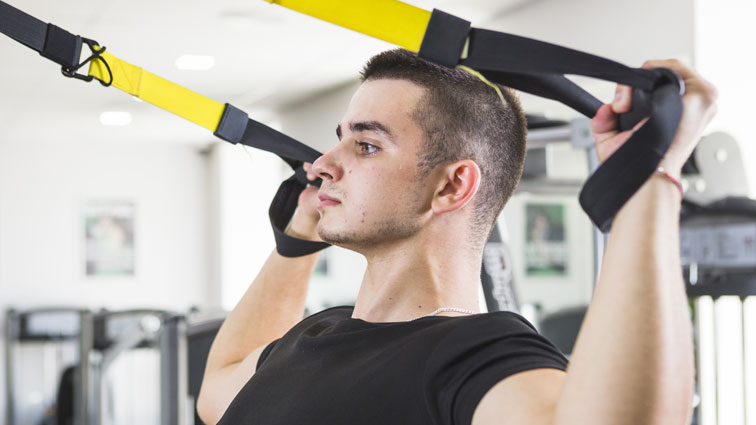
Grab TRX handles and pull yourself toward your hands with them near your temples. This movement closely matches the angle and feel of face pulls. Adjust how hard it is by changing your body angle. Your core also has to work hard since you are suspended throughout the movement.
Rear Delt Machine
Most gyms have a reverse fly machine that targets the rear delts in a similar way to face pulls. It does not include the outward rotation, but it is a solid option when the cable machine is being used.
Inverted Bar Row
Set a barbell at a low height in a rack, lie under it, and row yourself up to the bar with a wide grip. This works the same upper back and rear delt muscles and uses your own bodyweight, so it is easy to make harder or easier by adjusting the bar height.
Safety Tips
Face pulls are one of the safer exercises you can do, but keep these things in mind:
- If you have a shoulder injury, talk to a doctor or physiotherapist before you start doing face pulls.
- If anything hurts during the movement, stop and check your cable face pulls form or lower the weight.
- If you use resistance bands near your face, always check them for cuts or fraying before each session. A snapped band can hurt your eyes badly. Thick circular bands are safer than tube bands with handles.
- Do not try to do face pulls as a heavy, low-rep strength exercise. They are not built for that. Keep your reps at 10 or higher and focus on good form.
Conclusion
Cable face pulls are a simple exercise with real results. Whether you use them as cable face pulls for back thickness, cable face pulls for shoulders health, or both, they build the rear delts and upper back, protect the shoulder joint, fix posture, and make your other lifts safer and stronger.
The key is good cable face pulls form from day one. Always use rope cable face pulls for the best range of motion. Keep your elbows high, pull to your forehead, squeeze at the top, and control the return. Whether you go with standing cable face pulls or seated cable face pulls, do them regularly and your shoulders will feel the difference.